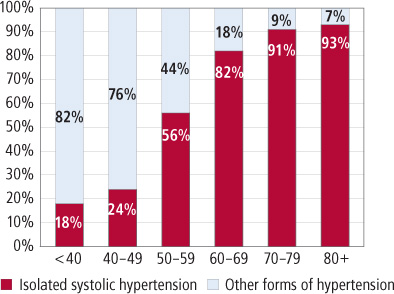
Isolated systolic hypertension is defined by a systolic pressure above 140 mmHg and diastolic blood pressure, which is still less than 90 This disorder is mainly the elderly and is characterized by an increase (wide) pulse pressure. Pulse pressure difference between systolic and diastolic blood pressure. Rise in systolic blood pressure elevation without the diastolic pressure, such as isolated systolic hypertension, therefore, increases the pulse pressure. Hardening of the arteries to promote the extended pressure pulse.
Once considered harmless, is a high pulse pressure is now considered an important precursor or indicator of health problems and potential organ damage. Isolated systolic hypertension is associated with a 4.2 times increased risk of future heart hypertrophy, heart attack (myocardial infarction), stroke (brain damage) and death from heart disease or stroke. Clinical studies in patients with isolated systolic hypertension indicated a reduction in systolic blood pressure of 20 mm to a level below 160 mm Hg reduces these increased risks.

0 comments